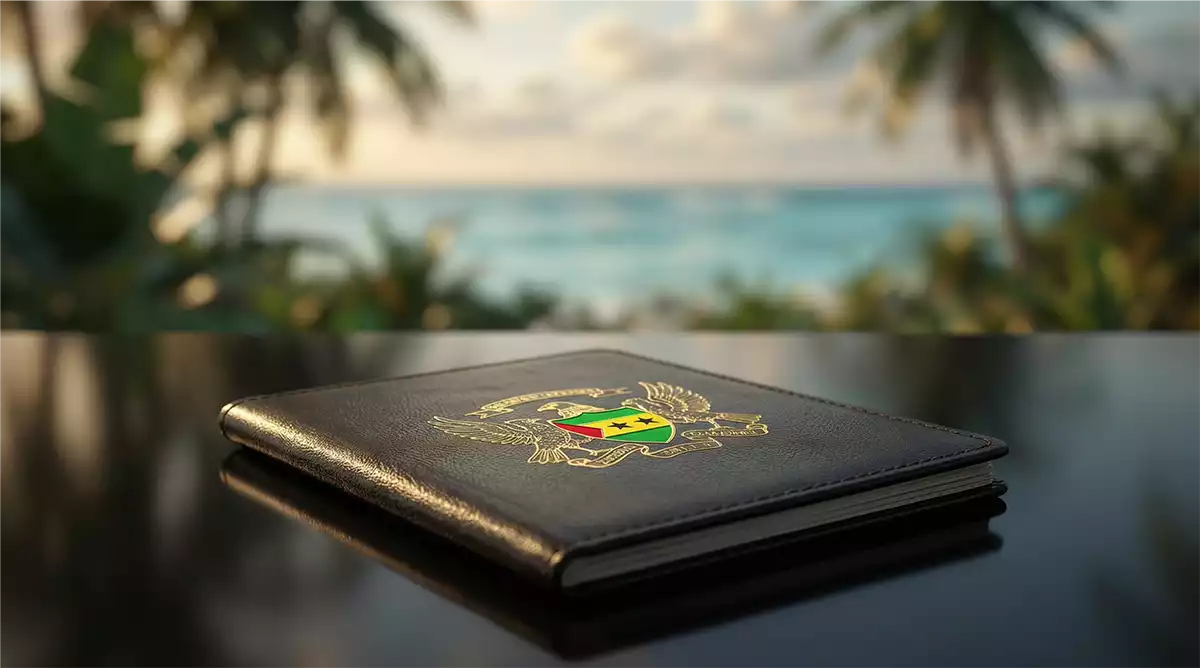
São Tomé and Príncipe second citizenship is economic citizenship acquired through a minimum $90,000 government donation under Decree-Law No. 07/2025, launched in August 2025, with no prior residence requirement. The programme permits dual citizenship, targets investors seeking an African passport for emerging-market access, and processes applications within three to six months.

"Plan B citizenship" describes a legally acquired second nationality designed to provide alternative travel rights, residence options, and political diversification. What makes it practical: if your primary country tightens visa policies or faces political upheaval, you have a backup travel document. São Tomé's citizenship by investment joins established schemes in the Caribbean and Mediterranean but offers a distinctly African focus with minimal visa-free travel compared to competitors.

Key Takeaways

  • São Tomé's citizenship programme requires a $90,000 government donation and launched in August 2025 under Decree-Law No. 07/2025
  • Dual citizenship is recognised under Nationality Law No. 07/2003—no forced renunciation of your existing nationality
  • Visa-free access concentrates in Africa and ECOWAS member states; you'll need visas for Europe and North America
  • Application processing begins with a 15-day initial review, then estimated three to six months total. Plan your timeline accordingly.
  • The programme lacks published approval statistics or independent due diligence audits as of 2026—a red flag compared to 30-year-old Caribbean schemes

What Is São Tomé and Príncipe's Citizenship by Investment Programme?

São Tomé and Príncipe established its citizenship by investment programme in August 2025 through Decree-Law No. 07/2025. You contribute to a government development fund and receive citizenship immediately—no residency requirement. This differs fundamentally from naturalisation, which demands years of residence and cultural integration tests.

An African passport distinguishes this scheme from Caribbean competitors. You obtain citizenship through monetary contribution alone, with background checks conducted by São Tomé authorities. After approval, you're never required to physically live there.

What does "plan B citizenship" actually mean?

"Plan B citizenship" is consultants' shorthand for a second passport held as contingency. If political instability strikes, taxation changes, or visa restrictions tighten, you have a backup. Legally, there's no formal category; all citizenship grants identical rights under international law. The phrase carries marketing weight but zero legal standing in nationality statutes.

São Tomé markets itself as alternative citizenship for geographic diversification. That's honest positioning—just understand that "plan B" is industry jargon, not a legal designation.

How does citizenship by investment differ from residency programmes?

Citizenship by investment grants full nationality and a passport immediately upon approval. Residency schemes? They provide legal residence status with possible naturalisation years later. Here's the practical difference: residency doesn't give you voting rights, passport privileges, or consular protection abroad. Citizenship by investment compresses what ordinarily requires five to ten years of residence into a single transaction.

São Tomé offers citizenship, not residence. You receive a passport and nationality certificate without obligation to reside anywhere. Portugal's Golden Visa, by contrast, requires five years of residence before citizenship eligibility.

How Much Does São Tomé and Príncipe Second Citizenship Cost and What Are the Requirements?

The minimum investment is $90,000 as a non-refundable donation to São Tomé's National Development Fund. Add legal fees, document preparation, apostille services, and due diligence processing—your actual total typically runs $100,000 to $110,000.

Applications undergo background screening coordinated by São Tomé government agencies. You'll need police clearance certificates from all countries where you've lived in the past ten years, medical examination results, proof of lawful income, and authenticated identity documents. An initial 15-day review follows submission, then due diligence begins.

What are the investment options for São Tomé citizenship?

Decree-Law No. 07/2025 specifies one route only: a non-refundable contribution to the National Development Fund. No real estate option. No business investment alternative. No government bond route. The $90,000 donation is fixed across all applicants.

Dominica and St. Lucia offer real estate pathways where you might recoup capital later. São Tomé's donation-only model means your money funds infrastructure and social development projects—though no public audit mechanism is disclosed.

Are there family inclusion options in the programme?

Family members may be included in your submission, but specific dependent fees aren't published in official sources. Caribbean programmes typically charge $50,000 for spouses, $25,000 per dependent child, and $75,000 for elderly parents. São Tomé's pricing remains opaque as of 2026.

Here's what matters: Nationality Law No. 07/2003 permits citizenship by descent. Your children born after you acquire São Tomé citizenship inherit nationality automatically, extending your plan B benefits to the next generation without additional fees.

Programme Minimum Investment Processing Time Visa-Free Countries Track Record
São Tomé and Príncipe $90,000 3-6 months ~50 (Africa-focused) None (launched 2025)
Dominica $100,000 3-4 months ~140 30+ years
St. Lucia $100,000 3-4 months ~150 8 years
Grenada $150,000 4-6 months ~140 (includes China) 14 years

What this means: São Tomé wins on price but loses on utility and history. Caribbean programmes have proven due diligence systems, passports that actually work globally, and documented approval rates. Choose São Tomé if African access and low cost matter more than global mobility.

What Travel Benefits Does a São Tomé and Príncipe Passport Provide?

São Tomé and Príncipe passport holders access approximately 50 countries visa-free or with visa-on-arrival privileges, concentrated in Africa. ECOWAS membership—which matters practically—grants free movement across 15 West African states: Nigeria, Ghana, Senegal, and others. But here's the limitation: no Schengen access, no UK visa waiver, no US VWP eligibility.

Compare this to Dominica or St. Lucia. Those citizens enter the Schengen Area for 90 days visa-free, visit the UK for six months without a visa, and access China without pre-approval. São Tomé passport holders require visas for all three.

How many countries can you visit visa-free with São Tomé passport?

Approximately 50 destinations. Most are African. Precise counts fluctuate as bilateral agreements shift; no official government tally exists.

Your real advantage: seamless movement within ECOWAS. If you work across West Africa in business, you eliminate consular appointments and permit applications. That's operationally valuable.

Does São Tomé citizenship provide EU access?

No. São Tomé isn't part of the European Union, Schengen Area, or any EU association agreement. You require Schengen visas to enter France, Germany, Spain—meaning embassy appointments, financial documentation review, and processing delays.

This significantly reduces São Tomé's appeal if your plan B strategy centers on European access. Portuguese citizenship (Golden Visa pathway) or Malta's direct citizenship programme remain the only investment routes to EU passports.

Why Choose São Tomé as Your Alternative Citizenship Strategy?

São Tomé appeals to investors seeking African passport exposure at below-market pricing. At $90,000, it undercuts Caribbean schemes by $10,000 to $60,000—real entry-level access to economic citizenship. Nationality Law No. 07/2003 explicitly permits dual citizenship, eliminating forced renunciation concerns that affect applicants from countries prohibiting multiple nationalities.

Geographic diversification is the core rationale. An African passport decouples you from Western-centric nationality portfolios. If you have business interests in emerging African markets, you gain consular support and regional mobility unavailable through a North American or European passport alone.

What are the tax benefits of São Tomé citizenship?

São Tomé and Príncipe operates a territorial tax system: it taxes income sourced within its borders only. Foreign-earned income, capital gains realised abroad, and overseas investments face zero São Tomé taxation for non-residents. If you don't live there, you owe no local income tax on global earnings.

This benefits high-net-worth individuals domiciled in zero-tax or territorial-tax jurisdictions. But—critical caveat—citizenship alone doesn't erase obligations to your country of residence. US citizens remain liable for US federal income tax on worldwide income regardless of additional nationalities acquired.

Is São Tomé citizenship recognised internationally?

Yes. São Tomé and Príncipe is a sovereign United Nations member state. Its passports are internationally recognised travel documents compliant with ICAO standards. Border officials in visa-required countries accept them for visa applications and entry procedures.

Recognition differs from reputation. Some immigration authorities scrutinise economic citizenship passports more closely during secondary inspection, particularly when travel patterns appear inconsistent with the issuing country. São Tomé's programme is brand new—border agents may ask extra questions until the passport becomes familiar, which could mean longer waits at immigration.

What Are the Risks and Limitations of São Tomé Second Citizenship?

The August 2025 launch date means no operational track record exists. Zero independent audits, approval rate statistics, or case studies. You're a first-mover applicant with no precedent to assess whether timelines hold, due diligence is thorough, or passports actually issue as promised.

Due diligence transparency remains murky. Caribbean programmes publish their screening methodology and rejection data openly. São Tomé hasn't disclosed how it evaluates applicants, whether rejected applicants can appeal, or whether your investment gets returned if the government says no. That opacity matters: you can't calculate your realistic rejection probability before committing funds.

Visa-free access lags far behind competitors. Fifty destinations sound okay until you compare. Caribbean schemes—Dominica, St. Lucia, Grenada—offer 140 to 150 countries for similar money. If you travel frequently or need access to major economies, São Tomé leaves you underserved. The programme works for specific scenarios: African business focus, regional West African mobility, or the tightest budget. Not for global wanderers.

Can you lose São Tomé citizenship after obtaining it?

Nationality Law No. 07/2003 permits citizenship revocation if you committed fraud, made false declarations, or engaged in criminal conduct during the application itself. Material misrepresentation—lying about your background, income source, or criminal history—triggers annulment. What it won't do: a conviction years after citizenship is granted doesn't automatically strip your nationality unless that conviction somehow relates back to lies on your original application.

São Tomé's legal framework imposes no physical residence requirement to keep citizenship. Unlike some countries that rescind naturalisation if you leave and never return, São Tomé asks nothing of you after oath-taking. You could never set foot there again and keep your passport valid through renewals.

What happens if the programme is discontinued?

Citizenship rights lock in the moment the government officially grants them—not when the programme keeps running. If São Tomé suspends or terminates its investment scheme tomorrow, your citizenship stands. Government policy changes affect future applicants only; they don't revoke already-granted nationality unless fraud is discovered.

History backs this up. Cyprus shut down its economic citizenship programme in 2020 after corruption scandals—existing citizens kept their passports. Bulgaria ended its scheme in 2022; previously approved citizens faced zero revocation. Programme closure ≠ retroactive citizenship cancellation.

How Does the São Tomé Application Process Work?

You start by submitting your application to São Tomé's designated citizenship-by-investment unit or through authorised agents. Bring: passport copies, birth certificates, marriage certificates (if applicable), police clearance certificates from every country you've lived in over the past decade, medical exam results, proof your money is legitimate, and bank reference letters. Everything in languages other than Portuguese needs sworn translation.

Decree-Law No. 07/2025 sets a 15-day initial review window. The government checks whether you've actually submitted everything or if they need to ask for more. Once they're satisfied the file is complete, formal due diligence kicks in—they dig into criminal history, financial background, and where your money came from.

After you pass due diligence, the government notifies you of approval. That's when you send the $90,000 donation. Within 90 days of approval, you must take an oath either in São Tomé itself or at a consulate (if one serves your location). Citizenship certificates and passports follow the oath ceremony.

How long does it take to get São Tomé citizenship?

Programme literature claims three to six months. Decree-Law No. 07/2025 specifies 15 days for initial review; due diligence duration varies depending on case complexity. Multiple jurisdictions in your background check? Expect longer. Clean record, straightforward file? Faster.

Those estimates haven't been tested yet. The government hasn't published average processing times, approval rates, or actual timelines from the first batch of applicants. Plan conservatively and assume delays beyond the marketing promise.

Do you need to visit São Tomé to get citizenship?

Yes. Decree-Law No. 07/2025 requires you to show up in person for the oath ceremony. Travel to São Tomé or find a consulate willing to administer the oath. That's different from several Caribbean programmes, which either let you do it remotely or skip it entirely.

Factor in flights, accommodation, time off work, and scheduling uncertainty if ceremonies happen infrequently or consular appointments have long backlogs. The oath isn't ceremonial theater—it's a legal requirement you can't skip.

This article is published by an independent law firm for informational purposes only and does not represent or claim affiliation with any government body, international organisation, or official authority.

Frequently Asked Questions About São Tomé Second Citizenship

Does São Tomé allow dual citizenship?

Yes. Nationality Law No. 07/2003 explicitly permits dual citizenship—you don't have to renounce your existing passport. São Tomé citizens may hold multiple passports simultaneously. Economic citizenship applicants keep their original nationality while adding São Tomé. One caveat: verify your home country also allows dual citizenship. Some nations revoke citizenship the moment you voluntarily acquire another one.

Can I pass citizenship to my children?

Yes. Children born after a parent acquires São Tomé citizenship inherit nationality automatically by descent under Nationality Law No. 07/2003. This happens regardless of where the child is born, so the plan B benefit extends to your kids' generation. Dependent children included in your original application get citizenship at the same time you do, though specific fees for each dependent remain undisclosed.

What are the renewal requirements for the passport?

São Tomé passports last either five or ten years, depending on standard international validity periods. To renew, submit updated photos, pay the renewal fee, and provide your citizenship certificate. No requirement to visit São Tomé or prove you've been there. Renewals process through São Tomé consulates abroad where they exist.

Is the investment refundable if rejected?

Refund policy isn't spelled out in public programme documents. Standard practice across established citizenship-by-investment programmes divides non-refundable application fees from the refundable investment itself. If you're rejected, the investment usually comes back; the fee doesn't. São Tomé hasn't clarified this yet. Ask your agent or contact São Tomé authorities directly before sending money, as policies vary wildly between programmes.

How does this compare to other plan B citizenship options?

São Tomé wins on price—lowest entry cost to economic citizenship anywhere. But you trade global mobility for that savings. Dominica, St. Lucia, and Grenada each deliver 140 to 150 visa-free destinations, established due diligence with published rejection data, and decades of operational history. They cost $100,000 to $150,000. São Tomé suits investors who prioritise African geographic advantage, tight budgets, or West African regional access. If you need passport power and travel freedom, Caribbean schemes are worth the extra cost.

Are there residency requirements after obtaining citizenship?

No. São Tomé imposes no minimum stay, visit frequency, or physical presence requirement. You could take the oath and never return. This contrasts sharply with residency-to-citizenship pathways, which demand sustained presence before and sometimes after naturalisation. With São Tomé's economic citizenship, you maintain full rights without setting foot in the country again.

What language requirements exist for the application?

Portuguese is the official language. Your application forms and supporting documents require Portuguese translations from sworn translators. The oath ceremony probably happens in Portuguese too, though interpretation services may be arranged. No language proficiency test or Portuguese-language interview is required—that's what separates economic citizenship from traditional naturalisation routes, which screen for linguistic integration.

Can I work and live in São Tomé with this citizenship?

Yes. Citizenship grants unrestricted rights to reside, work, own property, and run a business in São Tomé and Príncipe. You hold identical constitutional rights as native-born citizens, including voting and running for office after meeting any residency thresholds. As a member of ECOWAS, São Tomé extends those rights across the 15-nation West African bloc—you can live and work throughout the region.